At Salmon Creek Complete Dentistry, we want patients who are suffering from tooth loss to experience a more convenient way to achieve a complete smile. This is why Dr. Kelly is pleased to perform the start-to-finish dental implant process in-house, so no outside referral is required. As a skilled implant dentist who can deliver a seamless approach using a state-of-the-art cone beam scanner, digital impressions, and improved comfort, he encourages anyone missing one or more teeth to call our office to schedule a consultation today for dental implants in Salmon Creek.
Why Choose Salmon Creek Complete Dentistry for Dental Implants?
In-House Dental Implant Placement & Restoration
Dentist Refines & Expands Skills with Continuing Education
CT/Cone Beam Scanner Used for Accurate Dental Treatment Planning
What Are Dental Implants?
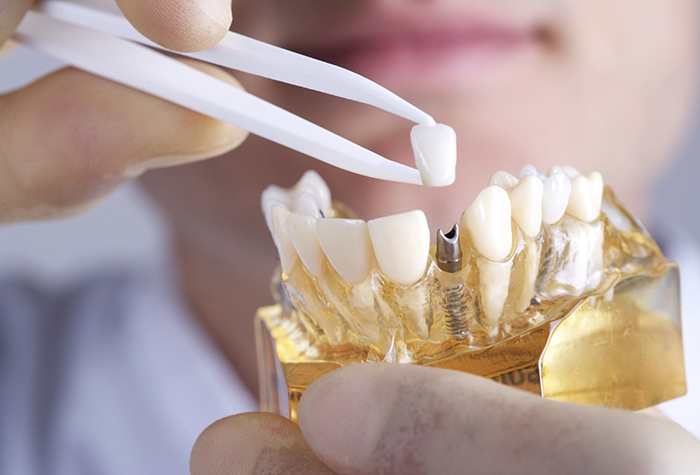
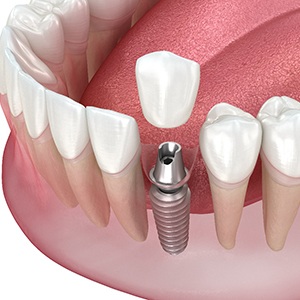
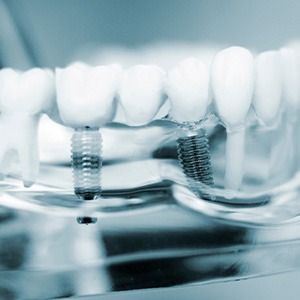
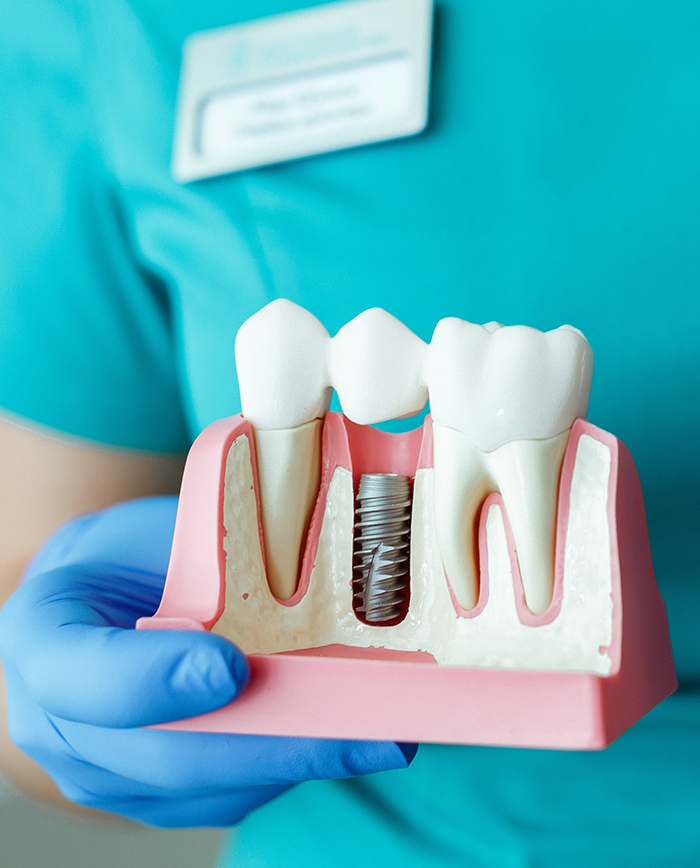
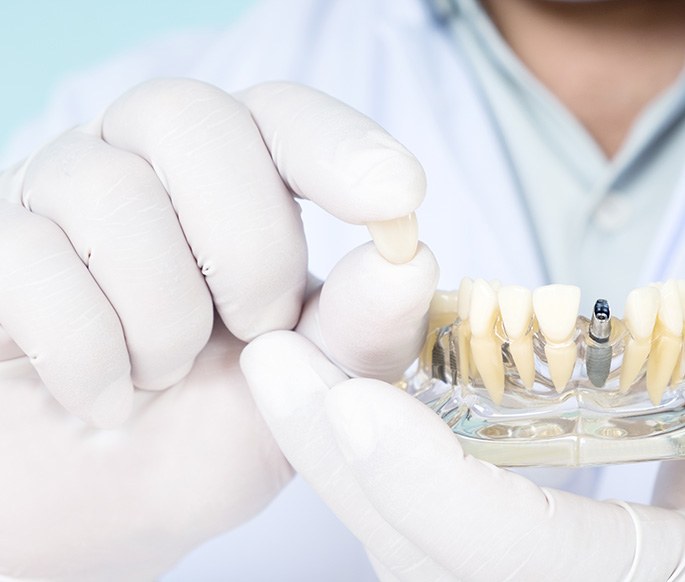
Dental implants work as a practical and efficient solution for tooth loss. They consist of artificial teeth that are secured directly into the jawbone, creating a strong foundation that is similar to the one provided by natural teeth. The entire process includes the use of implant posts made from biocompatible materials such as titanium, which fuse to your jawbone in a process known as osseointegration. This results in durable and robust support for your new teeth – a key aspect that contributes to the high success rate of dental implant treatment.
The 4-Step Dental Implant Process
During the dental implant process, our team will guide you through each step, from consultation and evaluation to implant placement surgery and restoration. Discover how we can help restore your smile today by reviewing the following information or calling us if you have any questions.
Initial Dental Implant Consultation
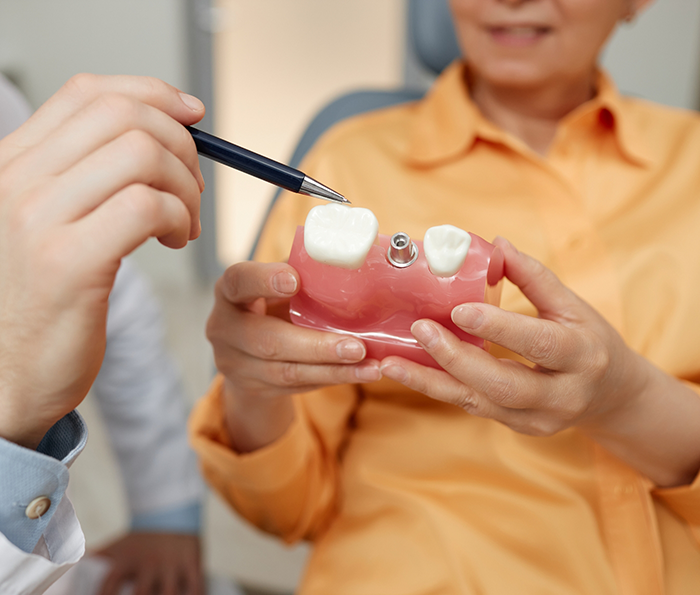
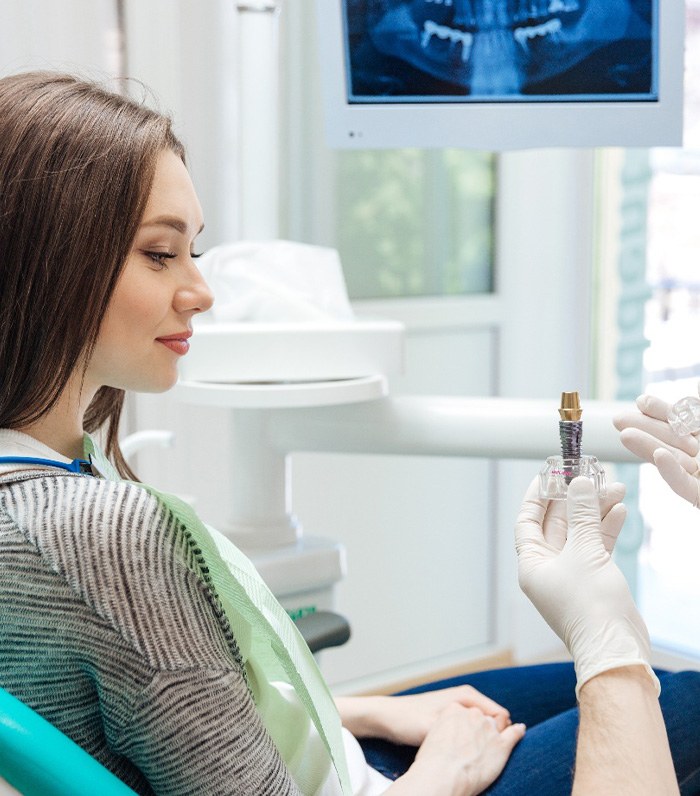
You will meet with Dr. Kelly for an initial consultation and evaluation. We will assess your oral health to confirm the procedure’s feasibility. This assessment includes screening for gum disease and tooth decay and examining jawbone density.
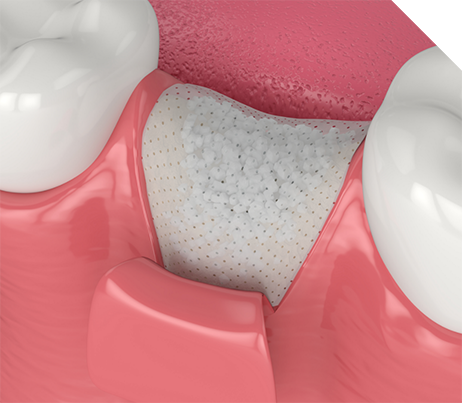
If necessary, procedures like bone grafting can be suggested to establish a robust base for the implants. At this stage, we will also discuss various treatment options and devise an in-depth plan that is tailor-made just for you.
Dental Implant Placement Surgery
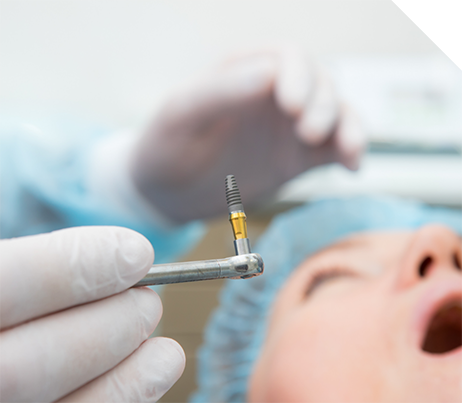
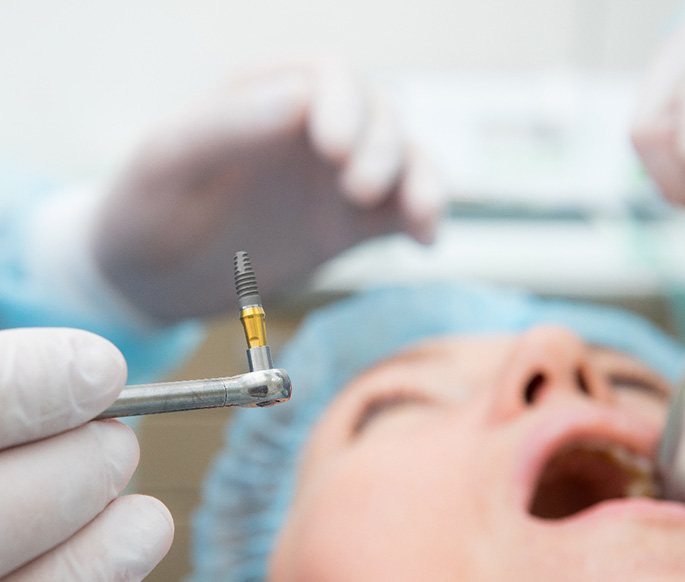
Dr. Kelly will perform your dental implant placement surgery, so no referral to an outside specialist is required. He will provide local anesthesia to ensure your comfort during the process before inserting titanium implant posts into your jawbone to form the foundation for your new artificial teeth. When finished, he will close up the gum tissues before placing a protective healing cap over each post.
Osseointegration/ Abutment
After the surgery, your body will heal and form a strong foundation around the implant posts through a process known as osseointegration. It can take 4-6 months for this to occur, so it’s important that you adhere to the guidelines provided by our team when you return home to recover. This is important for the long-term success and stability of your new teeth.
Our dental team will closely monitor your healing progress to make sure everything is going well. Once you are fully healed, we will proceed with the application of your metal abutments, which will help hold your new restoration in place.
Delivery of Finalized Restoration
Once you are healed after receiving your metal abutments, you will return to our dental office and have your finalized restoration attached. This will be crafted with the help of a digital impression taken early on of your smile. Depending on how many teeth were replaced, you may receive either a dental crown, bridge, or denture that looks and acts just like your natural teeth.
Benefits of Dental Implants
Dental implants provide many unique benefits that cannot be enjoyed with other tooth replacement solutions. That’s why they are considered the gold standard! If you are interested in learning why they are so loved by patients and dentists alike, then this next section is for you.
Day-to-Day Benefits
Good news: you won’t have to wait long to experience the benefits of dental implants in Vancouver! Once you’ve healed, you’ll enjoy the following perks:
A Stronger Bite – In addition to being crafted from high-quality materials, dental implants are inserted into the jawbone. As a result, you won’t be limited to eating the same foods day after day. Instead, you’ll be able to enjoy all of your favorite meals and snacks without hesitation.
Improved Self-Esteem – Whether you’re missing one tooth or an entire arch of teeth, your restoration will be custom-made to suit your face shape, dental needs, and aesthetic goals. Plus, dental implants create a strong foundation for artificial teeth, which feel, function, and look just like natural ones.
Easy Maintenance – While other tooth-replacement solutions require adjustments and special cleaning products, dental implants do not. In fact, you can care for yours with the same best practices you use for your natural teeth, like brushing twice a day, flossing every night before bed, and scheduling a dental visit every six months.
Health Benefits
Dental implants can also benefit your oral and overall health in the following ways:
Preserve Your Natural Teeth – While other tooth-replacement options require reducing other teeth, like dental bridges, dental implants do not. That’s because they don’t rely on the adjacent teeth for support. Instead, they get their strength and stability from your jawbone.
Prevent Dental Drift – It doesn’t take long for the teeth surrounding the gap to begin to shift. This phenomenon, which is known as “dental drift,” can lead to several issues, including premature wear and tear. Fortunately, dental implants can seamlessly fill the gaps, preserving the alignment of your bite in the process.
Eat a Nutrient-Dense Diet – Another perk of having a strong bite again: you aren’t limited to applesauce, yogurt, and pudding. Instead, you can eat more nutrient-dense foods and a wider variety of meals, which helps keep your immune system strong, your teeth healthy, and your gums infection-free.
Long-Term Benefits
Lastly, dental implants come with the following long-term benefits:
Help Prevent Bone Loss – While dental bridges rest against the adjacent teeth and dentures rest against the gums, dental implants are secured to the jawbone. Not only does this result in improved stimulation, but it also leads to a lower risk of facial sagging.
Long-Lasting – With the right habits in place, like brushing and flossing consistently at home, dental implants can last for 30+ years.
Cost-Effective – Sometimes, patients experience a bit of sticker shock when they get a quote for dental implants. However, as we mentioned above, they can last for several decades. As a result, there’s a good chance that they are the best choice for your smile and your wallet over time.
Who Dental Implants Can Help
Are you curious if you’re a good candidate for this tooth-replacement solution and, if you are, how dental implants work in Vancouver? If so, this next section is for you! In it, we’re covering the qualities we look for during the consultation as well as the three different types of dental implants that we offer.
Who Is a Good Candidate for Dental Implants?
During your consultation with our implant dentist in Vancouver, Dr. Joseph Kelly, he will determine:
If your jawbone is strong enough to support dental implants
If your gums are healthy (as well as any natural teeth you have)
If you are willing to break bad habits, like smoking
If you are committed to healthy habits, like brushing and flossing daily
Important note: There are some patients who aren’t candidates for dental implants at their initial consultation. If that’s the case for you, don’t get discouraged. After all, there’s a good chance that we’ll be able to provide the necessary preliminary care, which means that having a complete smile won’t be out of reach for long.
Missing One Tooth
If you are only missing one tooth, then we can replace it with a single dental implant. After securing it into your jawbone, we will secure a custom dental crown on top. Since both the root and crown of your tooth will be restored, your dental implant will look and feel extremely natural. Not only that, but it can last for 30+ years with the proper care and maintenance.
Missing Multiple Teeth
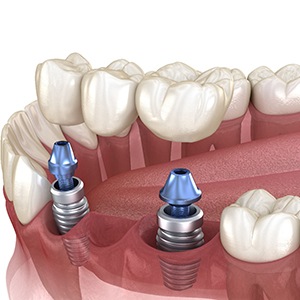
How we rebuild your smile will depend on a few factors, including how many teeth you are missing. For example, if you are missing three teeth consecutively, then we will likely recommend an implant bridge. If you’re missing several teeth throughout your mouth, on the other hand, then we may secure a partial denture in place with dental implants instead. Rest assured, we will discuss both options in-depth during your consultation so you can confidently decide which one is best for you.
Missing All Teeth
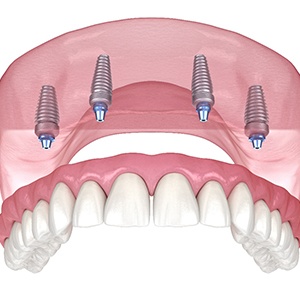
If you are missing all of your teeth, you might assume that traditional dentures are your only option. That’s not the case! With implant dentures, we can secure several dental implants throughout the arch. Then, we can secure a custom denture on top, restoring the strength of your bite and the appearance of your smile in the process.
If you are interested in learning more about dental implants, including if we think they are the best tooth-replacement solution for you, then take the next step: schedule a consultation at our office.
Understanding the Cost of Dental Implants
Although many experts consider dental implants the ideal way to rebuild smiles after tooth loss because of their unique benefits, they tend to cost more than other solutions, such as dental bridges or dentures. However, they’re also usually incredibly successful and often are more resilient and long-lasting than the alternatives, and can help pay for themselves over time.
Continue reading to learn more about how the cost of dental implants is determined and how our office in Vancouver helps make treatments more affordable!
Preliminary Treatments & Dental Implant Surgery
Before you can undergo the dental implant procedure, you must schedule a consultation with Dr. Kelly to ensure you’re a good candidate. This gives him the opportunity to discuss your dental concerns and goals, and examine your mouth to verify that you can safely undergo oral surgery.
Our team will also check your teeth and gums for signs of other issues, such as tooth decay or gum disease, that can negatively affect the outcome. If fillings, periodontal therapy, or other treatments are required, you’ll also be responsible for covering those services. Fortunately, Dr. Kelly can place and restore your prosthetic in the office, avoiding additional costs to pay for outside providers.
The Parts of Your Dental Implant
There are other factors unique to your circumstances that can influence the price of your dental implant itself, which can impact your final invoice, including:
The number required. A single post can help replace one lost tooth, or two or more can be placed to anchor a specially designed bridge or set of dentures, raising the rate.
The type of restoration. Dental crowns, bridges, and dentures are anchored to implants to close the spaces in your smile, and each has its own pricing structure.
Its size. Larger prosthetics require more materials, which can increase the cost.
The brand. Different manufacturers make implants to meet the needs of certain patients using various materials, which can affect the price.
How Dental Implants Can Help You Save Money
If you’re only considering your budget, you might feel tempted to choose dentures or bridges. While this might seem more cost-effective, the truth is that the alternative treatments don’t have the same strength and stability as implants and are more likely to chip, crack, become destabilized, or be completely dislodged. This results in periodic repairs or replacements that can impact your budget over time.
Not only that, but you’re unlikely to require additional accessories, like adhesives, special cleaners, or soaking solutions, to maintain your dental implants, helping you avoid added expenditures.
Does My Dental Insurance Cover Dental Implants?
Most dental insurance policies consider dental implants to be a luxury rather than a necessity and might not cover the cost. However, there may be exceptions, especially if your treatment is deemed medically necessary to maintain your oral health. Furthermore, your plan might cover different aspects of your treatment, like your examination or X-rays, to help minimize out-of-pocket expenses.
If you’re unsure what your policy includes or require assistance with claims or paperwork, please let our office staff know. We are familiar with different plans and will gladly help you maximize your available benefits.
Making Dental Implants Affordable
Dr. Kelly and the rest of our team believe that everyone deserves to have a beautifully restored smile they can rely on regardless of their current financial situation. If you’re concerned about affording dental implants, you might benefit from one of the following options:
In-Office Dental Plan. We offer customized plans for adults, children, and people with existing periodontal issues for a flat fee to provide discounted services. Unlike traditional insurance coverage, there are no waiting periods, annual deductibles, or other similar restrictions.
Flexible Financing. We happily welcome CareCredit payment plans, which allow you to divide your total invoice into more manageable installments paid over a designated period, if your application is approved.
Why Choose Us for Dental Implants?
We are the trusted choice for dental implants because of our expertise and commitment to quality care. Our skilled implant dentist has extensive experience in performing successful implant surgeries, ensuring that you receive the best possible treatment.
We understand each patient is unique, which is why:
We take the time to create personalized treatment plans tailored to your specific needs.
You can expect exceptional results and a comfortable experience from start to finish.
We use state-of-the-art technology and techniques to ensure precise implant placement and natural-looking results.
Our focus remains on maintaining good oral health throughout the entire process, ensuring optimal healing and long-term success.
You can trust us to deliver superior dental implant services because of our dedication to providing high-quality care.
Dental Implant Post-Op Instructions
Now that you’ve had your beautiful new dental implants surgically placed, it’s time for the recovery process to begin. But don’t worry, it’s nothing to be concerned about. Below, we’ll discuss what you can expect, including which symptoms are normal, and how you can help your newly restored smile heal. If you ever experience any intense, abnormal pain or any other strange side effects not mentioned here, please don’t hesitate to call us for guidance.
What to Do Directly After Dental Implant Surgery
Directly after your dental implant surgery, your biggest priority is to leave the blood clot forming in your incision site(s) untouched so that healing happens smoothly. To that end, please be sure to follow these rules:
Don’t spit; instead, use tissues to wipe your mouth, or swallow your saliva.
Don’t use drinking straws until cleared by your dentist.
Don’t smoke for at least the first 24 hours after your procedure, or longer if possible.
Avoid touching your surgical site(s) with your fingers or tongue.
Common Side Effects When Recovering from Dental Implant Placement
Following your procedure, some mild side-effects are perfectly normal, especially in the first few days after placement. These may include:
Intermittent bleeding which can be lessened by gently biting down on gauze or a clean washcloth with light pressure. This may continue over the course of multiple days.
Swelling is common during the first 72 hours and could last for over a week. You can use cold or warm compresses to help alleviate pain and inflammation.
General discomfort is normal and can be alleviated with pain relievers as directed by your dentist.
Each of these effects should be temporary and gradually subside with time. If this is not the case, let us know.
Your Diet After Dental Implant Surgery
For the first few days after your dental implant surgery, we recommend sticking to a softer diet and non-abrasive foods, including:
Mashed potatoes
Yogurt
Ice cream
Pudding
Soup (not extremely hot)
Hummus
Scrambled eggs
Pasta
You may return to eating a normal diet as soon as you feel up to it, but we recommend limiting your consumption of anything too tough or crunchy, and avoiding any direct chewing on your implant site(s).
Post-Op Health & Oral Hygiene
Maintaining your oral hygiene during the recovery period is very important. Here are few pointers to make it easier:
On the day after your surgery, it is okay to begin brushing your teeth again as usual but be very careful around the surgical sites.
Rinse your mouth with warm saltwater two or three times a day, ideally after meals. You can also use prescription mouth rinse if you have it but be sure to avoid any mouthwashes that contain high levels of alcohol like Listerine or Scope.
What to Do After Your New Teeth Are Attached
The great news is that the hardest part of your treatment is now behind you! When your new crown, bridge, or denture is attached, you may experience some minor, temporary sensitivity in the gums, but this is very easy to control with pain medication. There shouldn’t be any swelling, bleeding, or extensive recovery at this stage. In fact, you should be ready to smile that very same day!
Dental Implant Failure & Salvage
Dental implants are successful in the vast majority of cases, so you do not need to fret that something might go wrong with your treatment. Still, it is important to acknowledge that, in rare circumstances, dental implant failure can occur, potentially due to an infection, injury, or underlying medical condition. If you ever suspect that is happening to you, call our team right away. We will evaluate the situation and provide guidance on your next steps. We want to get the health of your implants and your smile back on track ASAP!
Although dental implants are known for their resilience, it’s essential to care for them correctly to continue making the most of their unique advantages. The procedure is typically incredibly successful, but if you develop a disease or damage your implants, they could fail.
Continue reading to learn more about a few simple precautions you can take to help preserve your restorations, and feel free to contact our office with any additional questions.
Make Oral Hygiene a Priority
These replacement teeth aren’t made from the same organic materials as the ones you’re born with, but that doesn’t mean that you no longer need to worry about your oral health. Bacteria in your mouth can potentially penetrate the implant site and cause an infection, such as peri-implantitis, the leading cause of failure.
You can prevent this by brushing and flossing twice daily to remove plaque buildup that contributes to different concerns, such as tooth decay or gum disease, that can harm your restoration.
Eat a Healthy Diet
Your dental implant will eventually fuse with your jawbone to become a more permanent part of your mouth, so you don’t have to worry that it will become destabilized or dislodged during meals. That means you can enjoy most of your favorite foods without harming them.
However, eating overly hard or sticky foods can potentially push or yank your new tooth out of place, or chip or crack the tooth-shaped restoration covering it, and should be avoided.
Break Bad Habits
You can also support your new teeth by breaking any less-than-ideal habits you have that could hurt them. For instance, people who smoke cigarettes or vapes, or who chew tobacco, are significantly more likely to experience implant failure because the nicotine entering your system suppresses your immune system.
Also, if you tend to open packages or boxes with your teeth, you can preserve their condition by taking a few moments to locate a more appropriate tool for the job, such as a pair of scissors, letter opener, or box cutter.
Protect Your Dental Implants
Athletes and others who participate in close-contact activities are at a higher risk of sustaining an injury that destabilizes, damages, or dislodges their teeth. Also, if you suffer from bruxism (teeth grinding), you might crack or chip your implant.
Dr. Kelly can provide a custom-fitted oral appliance, such as a nightguard or mouthguard, that provides a layer of cushion around your arches to shield them from the pressure of a blow to the face or subconscious clenching.
Schedule Regular Dental Checkups
You can also safeguard your smile by scheduling a routine checkup and cleaning with our team in Vancouver every six months. This allows him to monitor your condition so that he can catch and treat any areas of concern before they become more problematic.
Dental Implant FAQs
How Long Do Dental Implants Last?
Durable, natural-looking dental implants can last for 30+ years with proper care and use, but their lifespan greatly depends on your health and lifestyle.
To ensure that your dental implants last as long as possible, be sure to care for your smile by brushing, flossing, and rinsing with mouthwash daily. Be sure to attend your regular dental check-up and cleaning appointments every six months and avoid using your dental implants to chew anything too hard or sticky, and never open packaging with your teeth.
Avoid smoking or using tobacco products, as this has been linked with dental implant failure.
Can I Take Dental Implants Out?
No, you cannot remove your dental implants yourself, as they are fixed in the bone. Only a dental professional can remove them.
There are some types of implant dentures that can be removed for cleaning.
Does Getting Dental Implants Hurt?
During your dental implant surgery, your mouth will be numbed with local anesthetic before your procedure begins. This will ensure that you feel no outright pain. You may also be sedated, which will lower your body’s ability to register pain.
Thankfully, your jawbone doesn’t have many nerve endings to begin with. While the surgery itself should not hurt, your mouth may be sore for a few days afterward.
Be sure to take any prescription or OTC pain medication as directed. You may also use cold compresses to reduce pain and swelling.
Be sure to call your dentist if your discomfort worsens instead of improves after two or three days.
How Successful Are Dental Implants?
When placed by a skilled professional, your dental implants can have a success rate of over 95%, even ten years after placement!
However, this success rate depends on how well you take care of your smile with a combination of excellent oral hygiene, routine dental check-ups and cleanings, a healthy diet, and good oral habits.
The success of your dental implants can also vary depending on the location of the implant within the mouth. For example, molars receive more strain from chewing than front teeth do, so they may be slightly more likely to fail.